Service Overview
Our objective is to help customers adopt renewable energy, optimize electricity consumption, reduce dependence on conventional power sources, and improve long-term energy efficiency through customized solar installations.
Challenges We Address
Technical Scope & Deliverables
- Site survey and feasibility assessment
- Electrical load assessment and sanctioned load verification
- EV charger selection and technical specifications
- Charging station layout and installation drawings
- Electrical single-line diagram
- Bill of Quantities (BOQ) and cost estimation
- Power supply and grid connectivity assessment
- Earthing and electrical protection design
- Charger manufacturer datasheets and warranty documents
- Applicable electrical and utility approvals
- Installation and commissioning report
- Testing and electrical safety inspection records
- Charging management software configuration
- Payment gateway integration, where applicable
- Operation and maintenance manual
Procedural Workflow & Step-by-Step Execution
Requirement Analysis
Understand business objectives, expected EV traffic, target customers, budget, and charging requirements.
Site Selection
Identify a suitable location based on accessibility, parking availability, visibility, and proximity to potential EV users.
Site Survey
Inspect the proposed site, parking layout, electrical infrastructure, power availability, and installation conditions.
Feasibility Assessment
Evaluate technical feasibility, expected charging demand, operating costs, revenue potential, and investment requirements.
Charger Selection
Select suitable AC chargers or DC fast chargers based on vehicle compatibility, charging speed, power requirements, and business needs.
Electrical Load Assessment
Assess the existing sanctioned load, transformer capacity, power supply requirements, and electrical infrastructure upgrades.
Business Model Planning
Define the charging business model, pricing structure, payment methods, operating hours, and revenue-sharing arrangements, where applicable.
Technical Design
Prepare the charging station layout, electrical single-line diagram, cable routing, earthing plan, and electrical protection design.
Cost Estimation and Proposal
Prepare a detailed project estimate covering chargers, installation, electrical upgrades, software, civil works, and ongoing operating expenses.
Regulatory Approvals
Identify and obtain applicable permissions, electrical safety approvals, utility clearances, and other statutory approvals.
Equipment Procurement
Procure EV chargers, cables, connectors, protection devices, mounting accessories, and other required equipment.
Civil and Electrical Preparation
Prepare parking bays, foundations, cable routes, signage, lighting, and the required electrical infrastructure.
Charging Station Installation
Install chargers, electrical panels, cabling, earthing, protection systems, and associated equipment.
Software and Payment Integration
Configure charging management software, QR-code access, digital payments, tariffs, billing, and remote monitoring, as applicable.
Testing and Commissioning
Test electrical safety, charger functionality, communication systems, payment processing, and vehicle charging compatibility.
Grid Connection and Energization
Coordinate with the electricity distribution company and complete applicable inspections and connection requirements before energizing the station.
Business Launch
Publish station details, activate customer access, display pricing, and promote the charging facility to potential users.
Operations and Monitoring
Monitor charging sessions, electricity consumption, revenue, charger availability, and equipment performance.
Maintenance and Support
Conduct preventive maintenance, troubleshoot faults, manage warranty claims, and provide customer support.
Performance Review
Evaluate charging utilization, revenue, operating costs, customer feedback, and return on investment.
Expansion Planning
Assess demand and operational performance to determine whether additional chargers or new charging locations are required.
Business Benefits & Outcomes
Regulatory Notice & Scope Transparency
# Regulatory Notice & Statutory Disclaimer – EV Charging Station
The information provided on this website regarding electric vehicle (EV) charging stations, charging equipment, installation services, business opportunities, and related technologies is intended for general informational purposes only.
1. Regulatory Compliance
All EV charging station installations and operations must comply with applicable central and state government laws, electricity regulations, electrical safety standards, building requirements, and guidelines issued by the relevant authorities.
**2. Approvals and Permissions**
Depending on the project location, capacity, ownership, and installation type, applicable electricity connection approvals, electrical safety inspections, local permissions, and other statutory clearances may be required. Customers and operators are responsible for ensuring that all applicable requirements are fulfilled.
3. Electricity Supply and Infrastructure
The feasibility of an EV charging station depends on available electrical load, sanctioned load, distribution infrastructure, transformer capacity, site conditions, and requirements of the relevant electricity distribution company (DISCOM). Additional infrastructure upgrades may be necessary.
4. Technical Specifications and Compatibility
Charger specifications, charging speed, connector types, communication protocols, and vehicle compatibility vary by manufacturer and model. Customers should verify technical specifications and compatibility before purchasing or installing charging equipment.
5. Business Revenue and Return on Investment
Any revenue projections, cost estimates, profitability calculations, utilization assumptions, or return-on-investment figures are indicative only. Actual results depend on location, customer demand, electricity tariffs, operating expenses, equipment utilization, maintenance costs, competition, and other market conditions. No specific financial outcome is guaranteed.
**6. Government Incentives and Subsidies**
Information regarding government subsidies, incentives, grants, or other financial assistance is subject to the applicable scheme guidelines, eligibility criteria, funding availability, and approval by the competent authority. The availability of incentives must be verified at the time of application.
7. Installation and Electrical Safety
Installation, testing, commissioning, and maintenance must be performed by appropriately qualified personnel in accordance with applicable electrical safety requirements and manufacturer instructions. Appropriate earthing, circuit protection, cabling, and other safety measures must be provided as required.
8. Equipment Warranty and Maintenance
Warranty coverage, service commitments, equipment lifespan, and maintenance requirements are governed by the respective manufacturers' and service providers' terms and conditions. Regular inspection and maintenance may be necessary to ensure safe and reliable operation.
9. Payments, Software, and Data Security
Charging management platforms, mobile applications, payment gateways, and remote monitoring systems are subject to their respective service terms, technical limitations, and applicable data protection and payment regulations. Availability of specific features depends on the selected equipment and software provider.
**10. Limitation of Liability**
To the extent permitted by applicable law, information published on this website does not constitute a guarantee of regulatory approval, equipment performance, business profitability, charging availability, or project completion timelines. Users should obtain appropriate technical, financial, and legal advice before making investment or implementation decisions.
11. Changes to Regulations
Government policies, electricity tariffs, technical standards, subsidy schemes, and statutory requirements may change from time to time. Users should verify the latest applicable requirements with the relevant authorities before proceeding with a project.
Important Notice: Applicable laws, regulations, official directions, safety standards, and approval conditions in force at the relevant time shall prevail over any general information published on this website.
Frequently Asked Questions
Q What is an EV charging station?
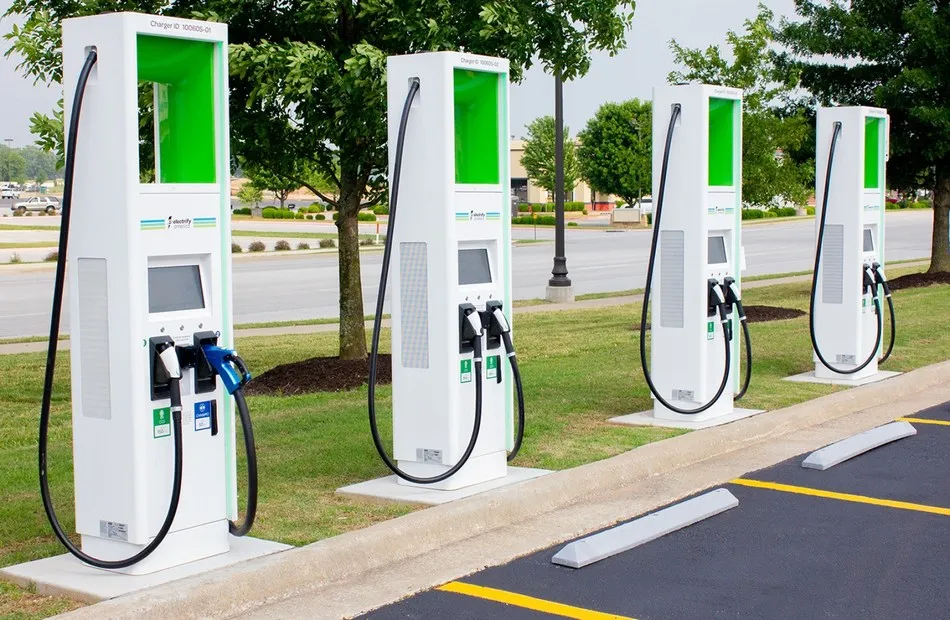
An EV charging station is a facility that supplies electrical power to charge electric vehicles, including electric cars, two-wheelers, three-wheelers, and commercial vehicles, depending on charger compatibility.
Q What types of EV chargers are available?
The main types are AC chargers for regular charging and DC fast chargers for faster charging. The appropriate option depends on vehicle compatibility, power availability, and charging requirements.
Q How do I start an EV charging station business?
Starting an EV charging business involves site selection, feasibility assessment, electrical load evaluation, charger selection, investment planning, applicable approvals, installation, and operational setup.
Q How much investment is required to establish an EV charging station?
Investment depends on charger type and capacity, number of charging points, site costs, electrical infrastructure, civil works, software, and applicable utility charges.
Q Where can an EV charging station be installed?
Suitable locations may include commercial properties, shopping centres, hotels, parking facilities, housing complexes, highways, offices, and fleet depots, subject to site feasibility and applicable requirements.
Q How long does it take to charge an electric vehicle?
Charging time depends on battery capacity, the vehicle's maximum charging rate, charger output, battery state of charge, and environmental conditions.
Q What is the difference between AC and DC charging?
AC chargers supply alternating current, which the vehicle converts to charge its battery. DC chargers supply direct current to the battery through compatible vehicle charging systems and generally enable faster charging.
Q Can one charging station support different EV models?
Yes, where the charger connectors, charging protocols, power ratings, and vehicle compatibility requirements are supported.
Q What electrical infrastructure is required?
Requirements depend on charger capacity and quantity and may include adequate sanctioned load, distribution panels, cables, earthing, protection devices, and utility infrastructure upgrades.
Q Is government approval required to install an EV charging station?
Applicable requirements depend on the location, installation type, electricity connection, and current regulations. Relevant electrical safety and utility requirements must be verified before installation.
Q Can I earn revenue from an EV charging station?
Yes. Potential revenue models include per-unit charging fees, session-based pricing, subscriptions, fleet charging contracts, and commercial partnerships. Actual profitability depends on utilization, tariffs, operating costs, and investment.
Q How should charging prices be determined?
Pricing should account for electricity costs, demand charges where applicable, equipment investment, maintenance, software fees, payment charges, competition, and applicable regulations.
Q Can an EV charging station operate 24/7?
Yes, if the site, electrical infrastructure, security, customer access, maintenance arrangements, and operating model support continuous service.
Q Can EV chargers be monitored remotely?
Compatible chargers and charging management software can provide remote monitoring of charger status, charging sessions, energy consumption, payments, and operational faults.
Q What payment options can be offered?
Depending on the charging platform, options may include UPI, QR-code payments, mobile applications, cards, digital wallets, and prepaid or fleet accounts.
Q What maintenance does an EV charging station require?
Maintenance may include inspecting connectors and cables, checking electrical protection systems, updating software, testing communication systems, and addressing equipment faults.
Q What is the expected lifespan of an EV charger?
Lifespan depends on equipment quality, usage frequency, environmental exposure, maintenance, and manufacturer specifications. Refer to the manufacturer's warranty and service documentation.
Q Can solar power be integrated with an EV charging station?
Yes. Solar panels can supply some charging demand when properly designed. Grid supply or battery storage may be used to address differences between solar generation and charging demand.
Q How can I select the right charger capacity?
Consider the target vehicle types, expected daily charging sessions, average parking duration, available electrical load, budget, and future expansion plans.
Q What documents are required to establish an EV charging station?
Common documents may include site ownership or authorization